

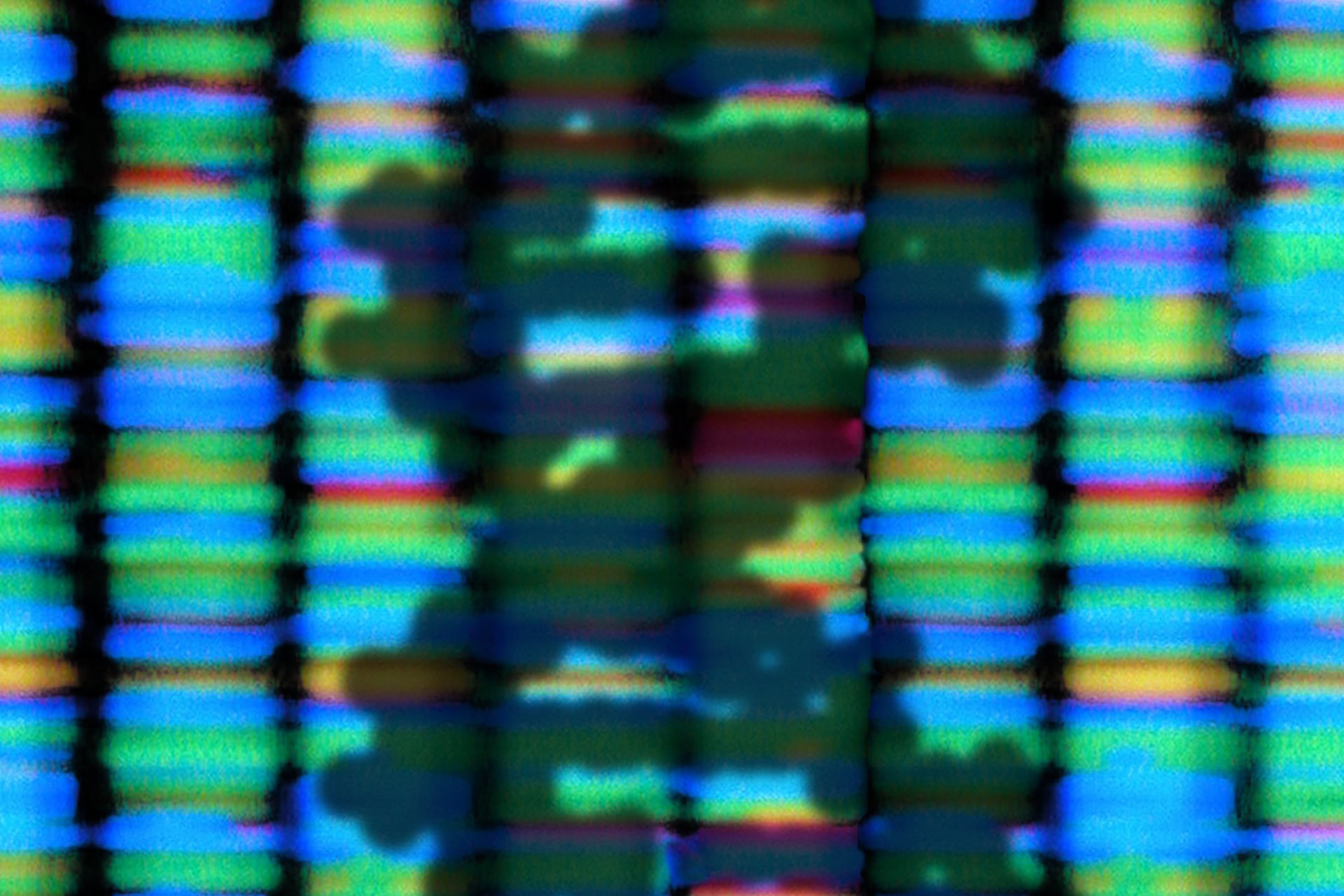
Two new studies published last week shed some light on the purpose of so-called 'junk' DNA - vast stretches of mammalian genomes that do not contain any genes, or serve any other obvious purpose. US researchers have showed that wiping out two huge chunks of the mouse genome appears to make no difference to the animals. Meanwhile, another US team has discovered a new type of gene in yeast, made up of DNA previously thought to have no function.
The human genome is made up of around 2.9 chemical 'letters' (base-pair) of DNA, but only around five per cent of it is thought to encode genes. The function of the remaining 95 per cent is largely unknown, but comparing the human and mouse genome shows that, like genes, much of it has been 'conserved' during the evolution of the two species. This suggests that unlike genuine junk DNA, which would gradually acquire random mutations that made no difference to the organism, conserved junk DNA sequences must have a purpose.
Researchers at the Lawrence Berkeley National Laboratory in California decided to breed 'knock-out' mice, by wiping out large sections of conserved, non-gene sections of DNA. To their amazement, the resulting animals, which were missing either a 1.6 million or 800,000 base-pair stretch of DNA, were indistinguishable from normal mice. The missing DNA had no effect on growth, metabolic functions, lifespan and overall development, suggesting that the conserved junk DNA has no major role in either growth or development.
However, says team leader Edward Rubin, it could be that these regions serve a purpose too subtle to be detected in the tests done on mice. Another explanation is that the regions are so critical that mice, and humans, have several back-up copies, so deleting just one or two of them has no effect. The team presented their results at a recent meeting held at the Cold Spring Harbour Laboratory in New York.
A team of scientists at Harvard Medical School may have identified a purpose for at least some junk DNA, according to a study published in Nature. They have discovered a yeast gene, called SRG1, located in a region of DNA long considered a genetic wasteland. Unusually, it does not make a protein, but instead just makes a mRNA (messenger RNA) copy of itself. mRNA usually acts as an intermediary molecule between a gene and the protein it codes for but, in the case of SRG1, the RNA does the work - its job is to stop a neighbouring gene from being switched on. 'This doesn't explain all junk DNA. It gives a potential use for some DNA', said team leader Fred Winston.
Sources and References
-
Scientists Find New Type of Gene in Junk DNA
-
'Junk' DNA may simply be in a jam
-
Junk DNA yields new kind of gene
-
Life goes on without 'vital' DNA
Related Articles

'Junk' DNA makes us unique, study finds
A recent study has lent more weight to the view that 'Junk DNA' may be anything but junk. A joint effort by the European Molecular Biology Laboratory (EMBL) in Heidelberg, Germany and Stanford University, California, US, has uncovered large differences between the non-coding DNA of different individuals, which may be associated with differing levels of disease risk and other traits too...
Leave a Reply
You must be logged in to post a comment.